A production line that shows you where it goes wrong
We bring embedded software, industrial IoT, AI and data together into one system that measures, steers and learns. Not a pilot that stalls after a year, but something that keeps running.
Why Industry 4.0, why now
Four developments happening at the same time. Each one pressures production and margin.
Shortages and ageing
Keeping production at level requires automation. What used to be a choice to grow is now a necessity to keep going.
EU sets the standard
The EU Industrial Strategy and the Digital Decade goals set the bar the whole sector has to clear.
WBSO, MIT, Horizon
National and European schemes are in place for innovation: WBSO, MIT and Horizon.
Obligation and opportunity
Unsteady supply chains, CSRD reporting and NIS2 make data and transparency a requirement for operations.
Business cases
Four applications already paying off on production floors today.
Predictive maintenance
Sensors and data analysis see problems coming before the line stops. Less downtime and lower maintenance costs.
Visual quality control
Cameras with AI spot deviations the moment they appear. Less rejection and faster corrections on the line.
Process optimisation with data
Production data exposes bottlenecks, waste and variation. Improvements become measurable.
Connected products
Products that send data back from the field. You see how the product is used, you help remotely and you can bill on usage.
Production that measures, controls and learns
A factory that keeps an eye on itself, sees deviations coming and corrects. Operators working with the data instead of around it.
Connected machines
Every machine becomes a data point. Production data comes together centrally, instead of scattered across reports and spreadsheets.
Data-driven decisions
What works and what does not becomes visible the moment it happens.
Autonomy where possible
Automate routines, so people do the work that needs attention and craft.
What Seven Technologies does
What we do in a production environment.
Develops
Embedded controllers, IoT platforms, dashboards and connections between OT (production) and IT (ERP, MES, BI). One team for the entire stack.
Researches
What is possible, what it delivers, how it fits what is already there and how it stays secure. Think first, then build.
Implements
Sensor integration, PLC connections, remote monitoring over 4G and edge computing, delivery into production at the customer. The connections, dashboards and code we deliver are yours.
Getting concrete
The parts this comes down to in practice, each with the technology.
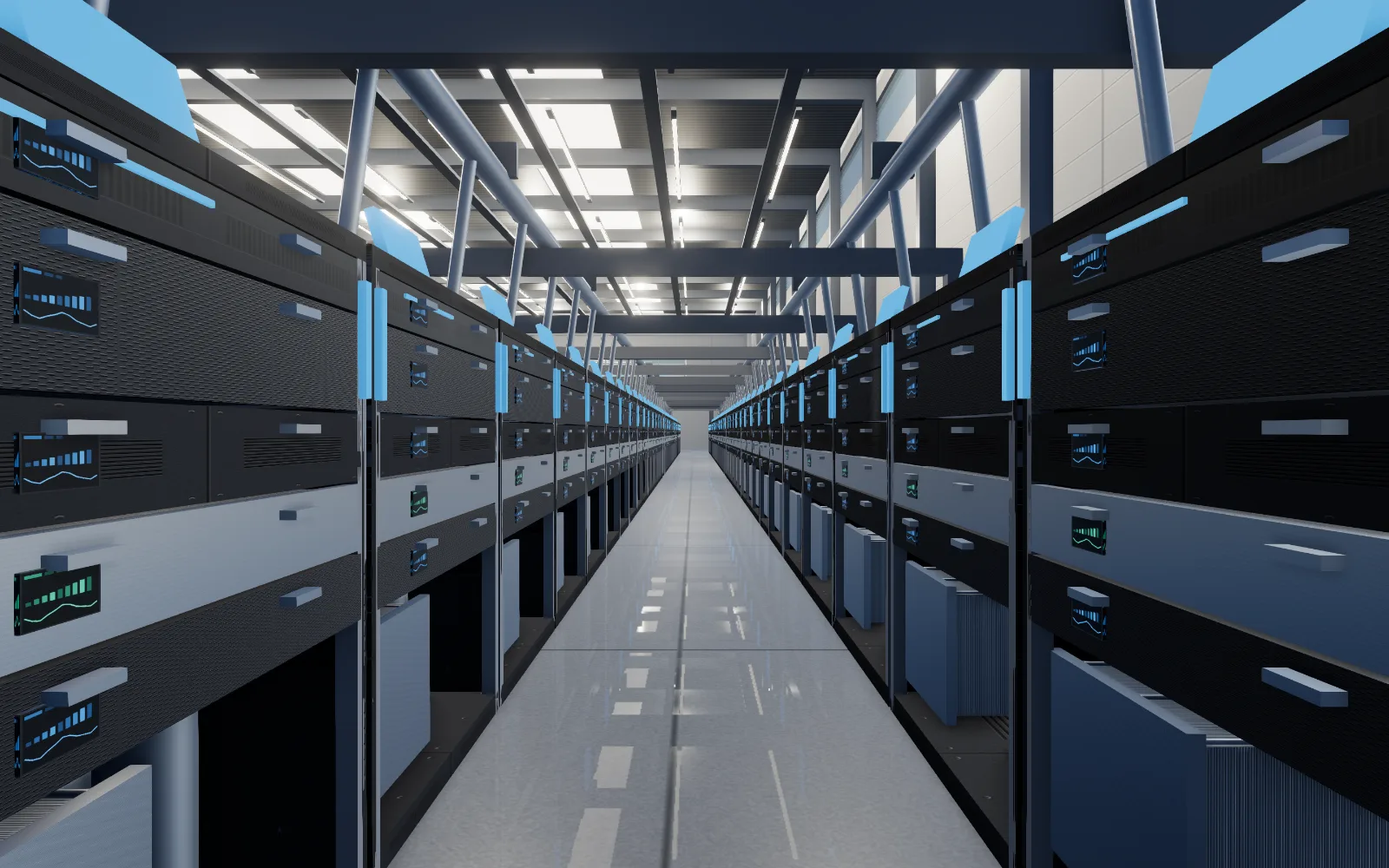
SevenTwin: your production as a digital twin
Connected machines only become valuable when you can see what they do. SevenTwin puts your building and machines in a navigable 3D model in the browser, with live status per machine and computed simulations. Walk through it yourself before we talk.
See SevenTwinSources, regulation and subsidies
Official publications on this subject.
EU policy and knowledge
What would this mean for your production?
Whether you are setting up a first trial, scaling an existing line or securing what already runs. It starts with a conversation about your production: where it gets stuck, what is possible, what it delivers.