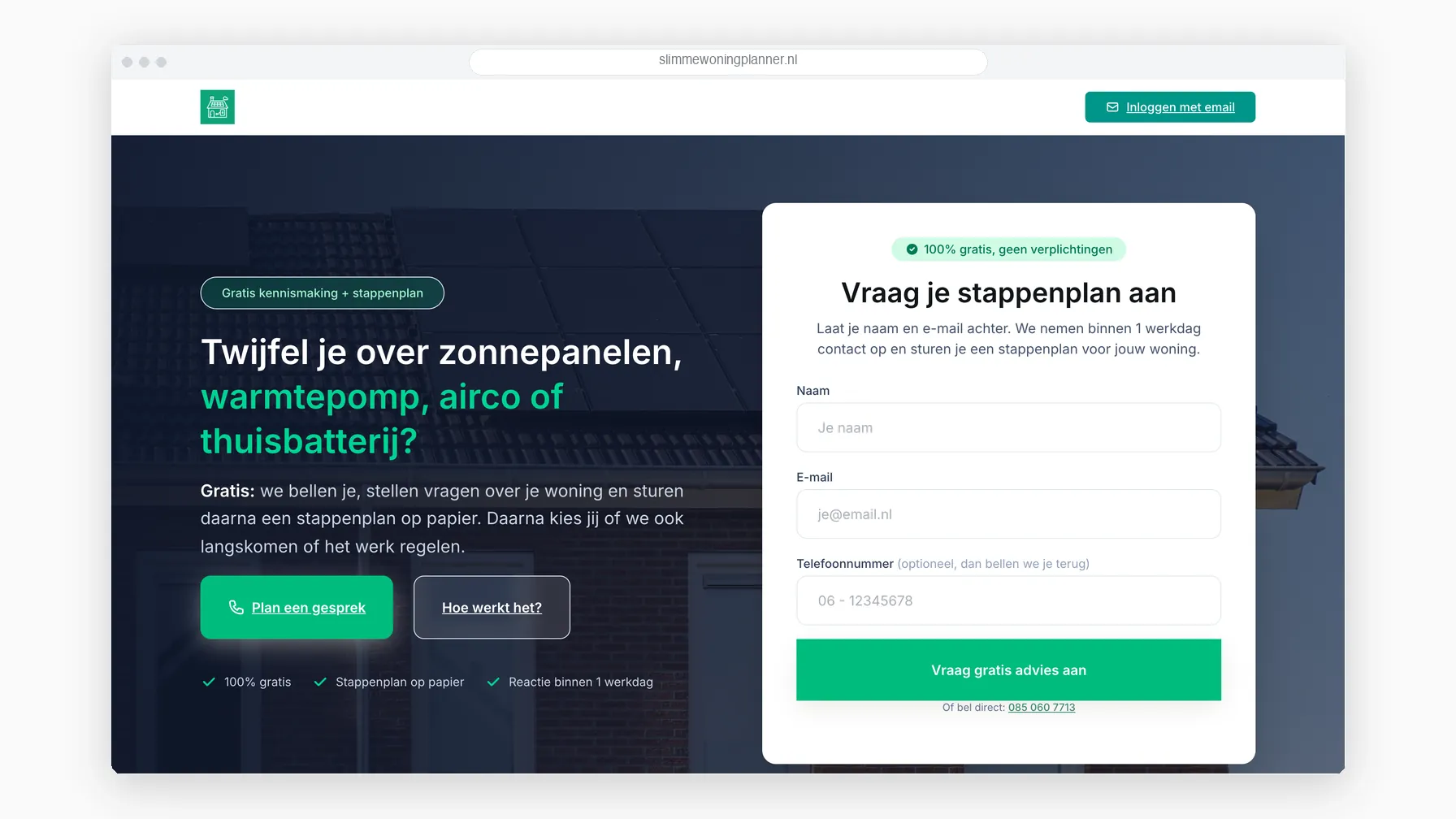
SlimmeWoningPlanner.nl
From energy-bill anxiety to "I know exactly what I can save"
The story
Before
Consumers want to make their homes more sustainable but don't know where to start. Solar panels? Heat pump? What really saves money? Installers give different advice. There is no independent simulation that looks at their specific situation.
Obstacle
Every home is different. Postcode, year of construction, orientation, consumption: everything counts towards the savings. A generic calculator is wrong for your house, and every installer calculates differently.
Insight
Build a platform that calculates with real data. Open databases (land registry, energy labels) plus what the homeowner fills in together form a savings plan for that one house.
After
6 months on: platform live. Consumers simulate solar panels, batteries, going electric. They see what it yields, also after 2027. First successful connections with installers.
The first 14 days
From concept to working prototype.
Discovery: what do people want to know?
We talk to homeowners. "How much do solar panels really save me?" "Is a heat pump worth it?" "What if I switch to electric driving?" We map the questions that keep coming back.
Identifying data sources
Cadastre for home data. Energy labels database. Dynamic electricity price API. Postcode.nl for regional data. We build the data backbone.
Home profile design
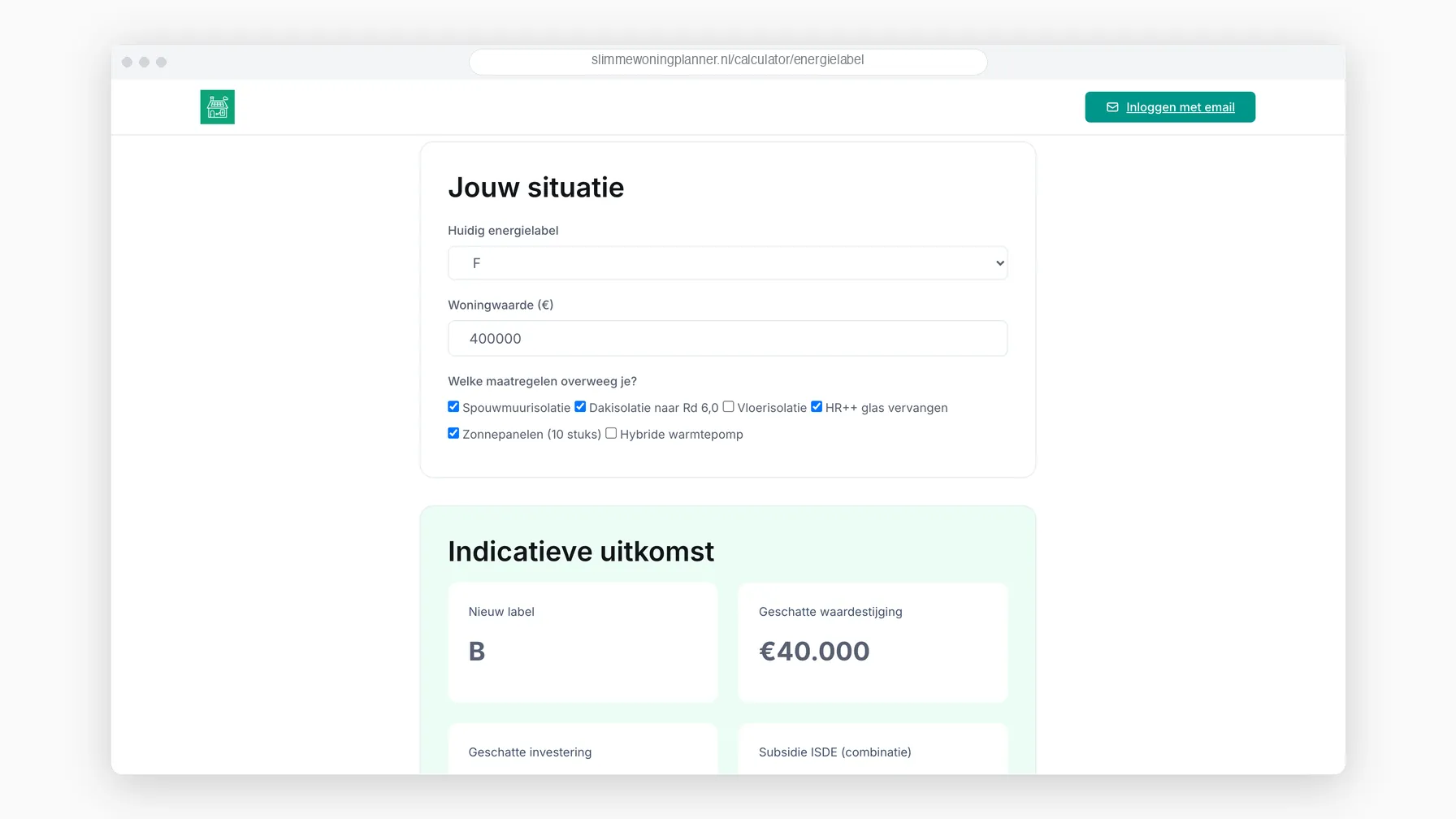
What do we need to simulate? Year of construction, type, m², orientation, current consumption. Easy to fill in, but enough data for accurate calculations.
Simulation engine basics
Formulas for solar panel yield. Based on postcode (sun hours), roof orientation, number of panels. We test with known homes to validate.
Open data integration
Automatically retrieve energy label via API. Cadastre data for home type. Average consumption per type and year of construction. The user has to enter less manually.
UI for postcode scan
Type postcode and house number, immediately see what we already know. Fill in what's missing. No endless forms, smart defaults where possible.
First simulation: solar panels
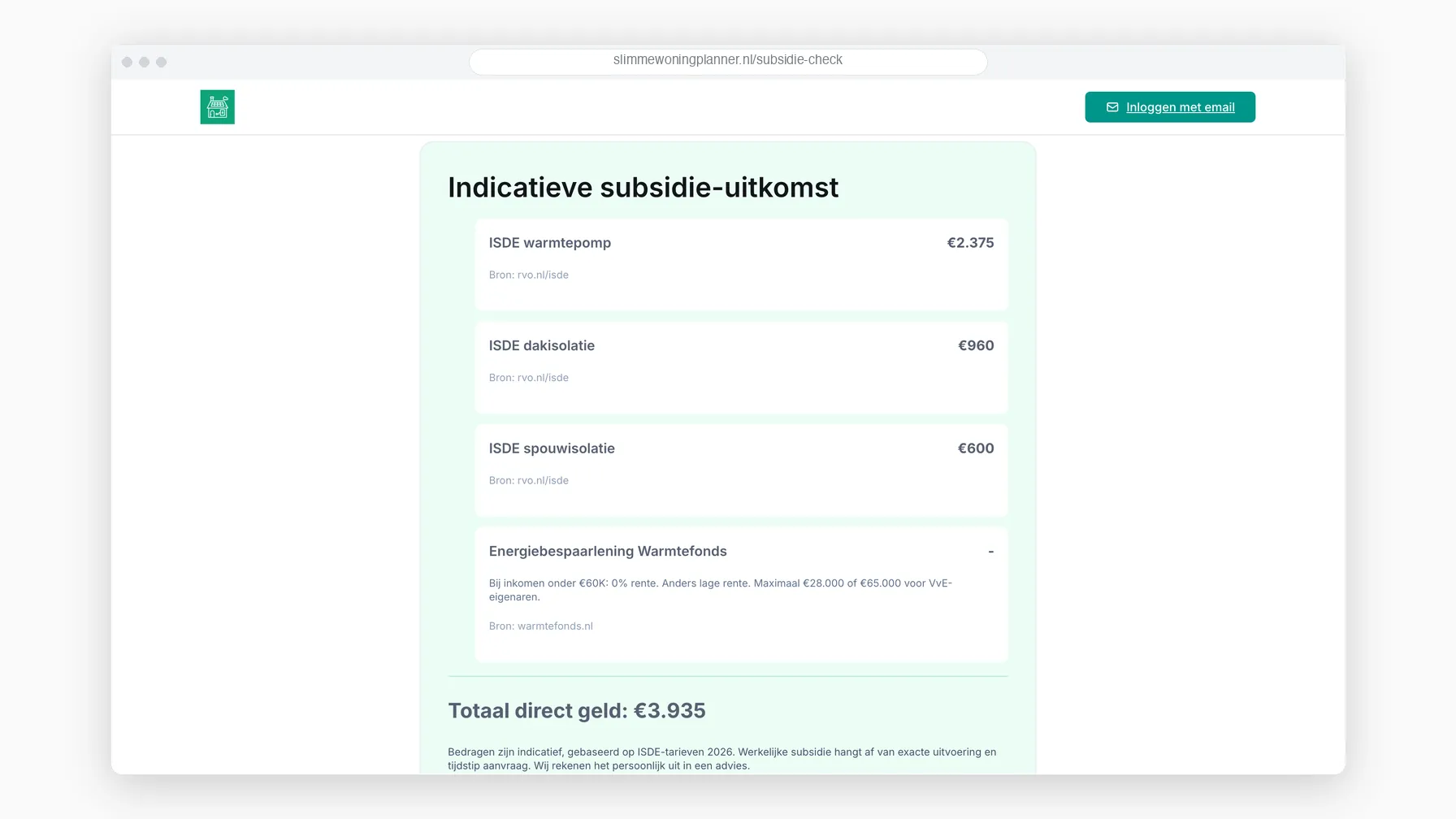
Input: number of panels, type, orientation. Output: expected yield per month, payback time, savings also after 2027. With source references for every calculation.
Add battery simulation
What if you add a home battery? How much more self-sufficiency? When is it worth it? Simulate different scenarios.
Electric driving impact
You're switching to electric. What does that mean for your energy consumption? Charging at home vs home battery vs dynamic tariff. Calculate everything.
Installation documentation feature
Users can record their existing installations. Boiler, solar panels, router. With photos, warranties, manuals. Useful when an installer visits.
Share with installer
Generate secure share link. Installer sees your home profile, not your personal data. They can directly make a solid quote.
Personal savings plan
All simulations together: what yields the most for your situation? Prioritisation on ROI. Downloadable as PDF to share.
Privacy and data encryption
Home data is sensitive. Everything encrypted. Anonymous calculations. If data is intercepted, it can't be traced back to a specific home.
Soft launch with first users
We go live with friends and family. Real homes, real simulations. How accurate are our predictions? We collect feedback.
1-3 months later
Six months: the first connections with installers
After six months the counter is at over 500 energy scans. The milestone: the first customers have been connected to installers for solar panels and home batteries. The simulations are accurate enough that people rely on them for an investment of ten thousand euros or more. Next step: automate that connection and bring in more installers.
1 year later
What comes next
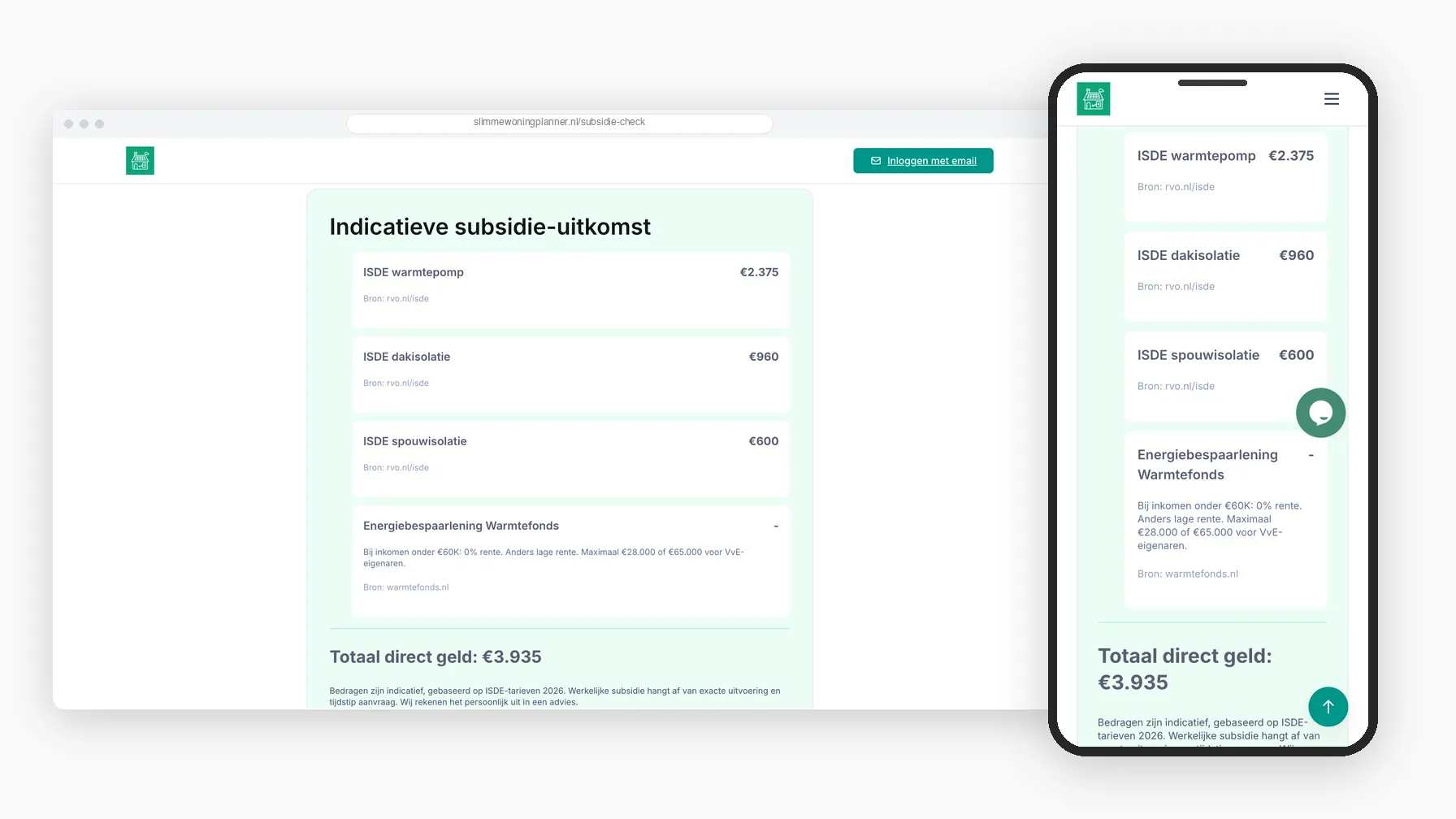
SlimmeWoningPlanner is becoming the starting point for making a home sustainable: simulate, plan, record and request quotes in one place. The job planner helps with the questions to ask your contractor, and a network of installers is ready. The plan belongs to the homeowner: downloading it and going to your own contractor is always possible.
"I didn't know if solar panels would still be worth it after 2027. The simulation showed: yes, even without netting. I've now ordered panels and a battery via their installer connection. Transparent and honest advice."